

Hello from Silver Lake, Los Angeles! It’s 100°F and it turns out palm trees don’t offer much shade, so we’re taking shelter in one of the dozens of coffee shops on Sunset Boulevard to wait out the midday sun.
September was a quiet month. That gave me time to catch up on some homeowner issues (wood-boring beetles and seismic retrofit) and settle into a workout routine (yoga, pilates, and running every week). I’ve been enjoying working on some personal projects, which is what the bulk of this month’s update is about.
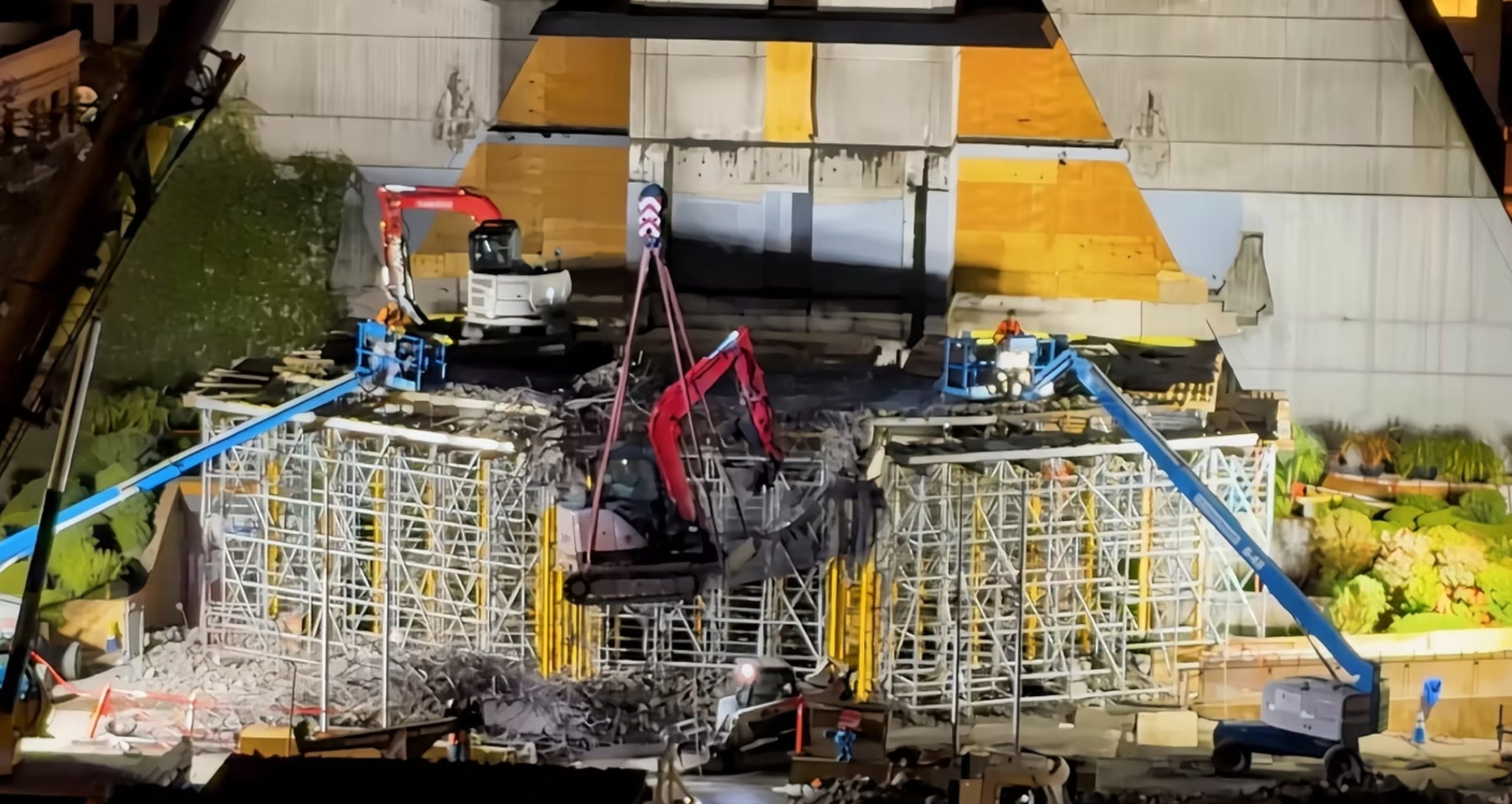
Before diving in, I wanted to highlight a surprisingly delightful publication: In the Works from San Francisco Public Works. They call it a digital journal, and instead of a typical blog or newsletter, they create a custom designed site each month. I found last month’s update about the demolition of the Kearny Street footbridge especially interesting. It’s complete with large photos and full-bleed video clips. And while removing pedestrian infrastructure sounds like a step backwards, it seems like the right call in this case.
Curbfind
When we moved to San Francisco a few years ago, I told my now-husband that we should resist the urge to buy all the furniture we needed for our new apartment. In SF, I explained, people frequently leave very nice and barely used furniture out on the curb. He was skeptical, but went along.
Sure enough, we found lots of great items on the curb, mostly during nightly walks through Forest Hill. To name a few curb finds off the top of my head: an unused pull-up bar, still in its original packaging; a metal end table; a large, clean rug in great condition; wooden clothing hangers; a Mustard brand console table; a wicker chair; wooden outdoor chairs; various shelving units; and various plants. I’m sure there’s many more finds I’m not thinking of.
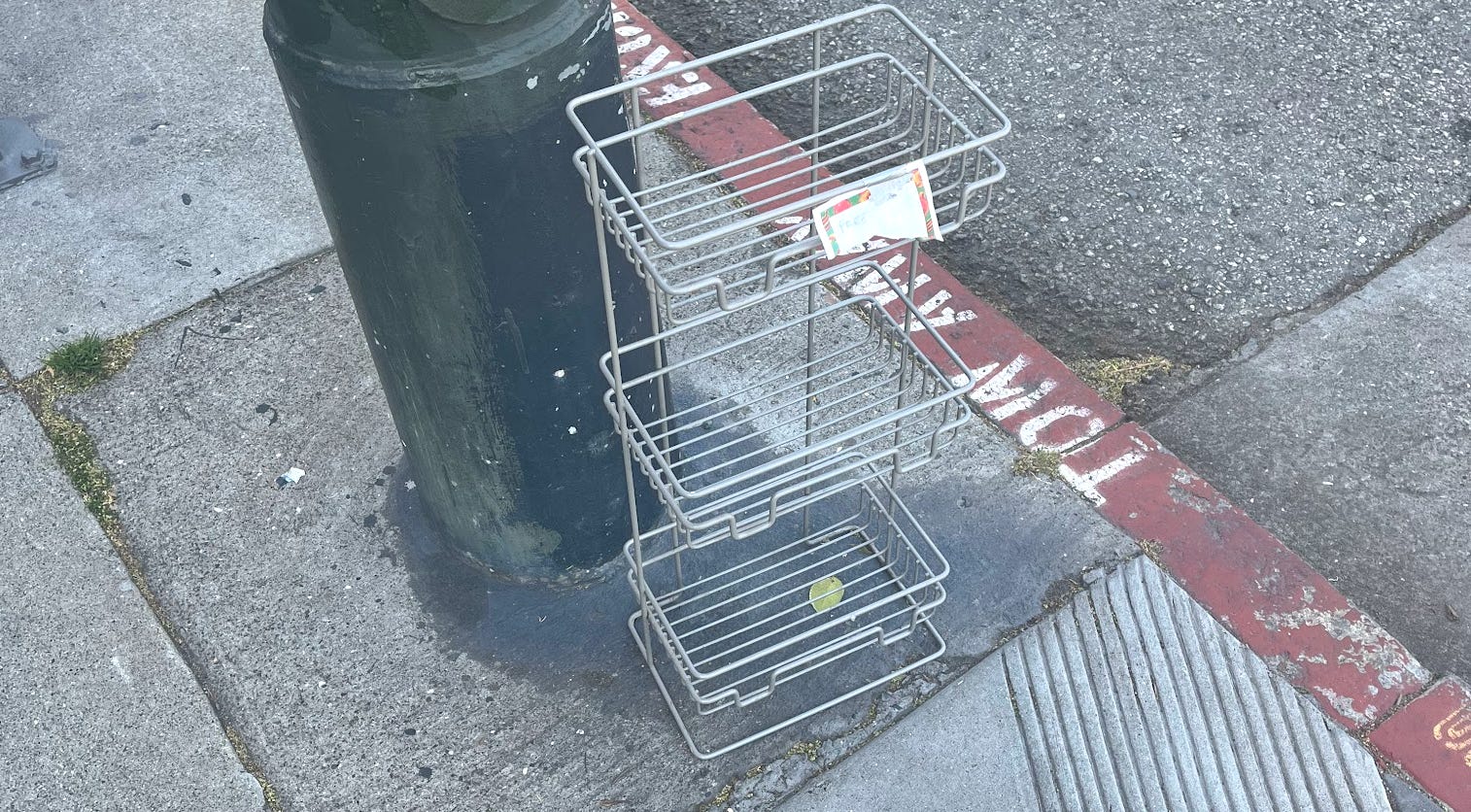
Often, we’ll walk by some really nice find but have no use for it. In just the past couple weeks we’ve seen a nice wooden desk and a live-edge coffee table that we wish we could take home but we already have a nice desk and a nice coffee table. So I vibe-coded a simple app called Curbfind. Now we can snap a photo of these finds and they are immediately visible on a map.
Curbfind is inspired by Solve SF, a simple app where you take a photo of a problem—such as garbage, graffiti, or a car blocking the sidewalk—and it automatically submits a request for the city via 311. You even get a follow-up notification when the city resolves the issue, often with an accompanying photo.
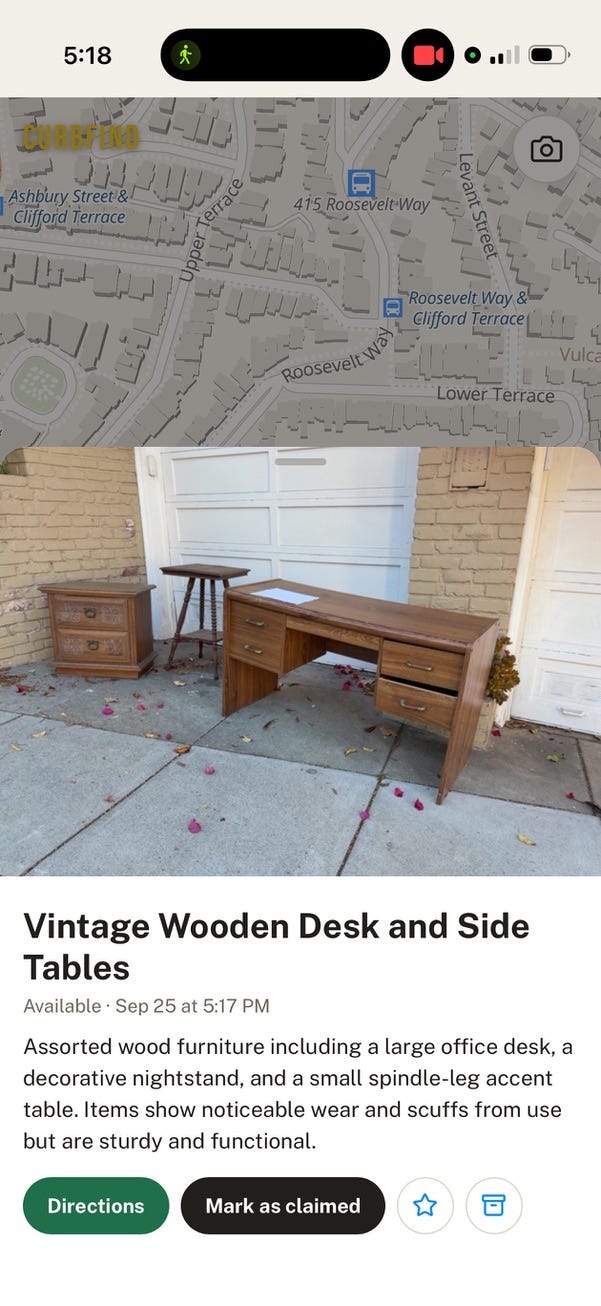
Part of what makes it so magical is the simplicity. When you open the app, the camera immediately launches. When you snap a photo, your location is immediately tagged. When you hit submit, an LLM adds a title and description, and then sends a push notification to other users. Posts disappear after 24 hours. No accounts, no extra taps or clicks.
This was a quick project that certainly could use some polish. Accounts would be nice to allow users to customize what they get notified about. But it’s live now at curbfind.io and ready for use if you’d like to try it out.
Running AI Locally
With Know This Place relying heavily on AI to wade through thousands of documents—city reports, old newspapers, and whatever sources it can find—I’m aware that my usage is contributing to the data center boom. This is concerning, because it’s been found that data centers can increase temperatures in surrounding areas by 4°F, and there is little oversight and no publicly available data regarding how often gas-powered turbines are being fired up to supplement the grid power that these data centers rely on.
But what if I could run an LLM right from my desk, on hardware that I own and control? There would be no cooling cost—in fact, the residual heat could be just enough to keep my office comfortable in San Francisco’s temperate climate. There would be no fossil fuels: I’d only run it when the grid is reportedly “green,” which is especially impactful in California where there’s an excess of solar power generation midday (this is also when power is cheapest). And I wouldn’t be contributing to contaminated drinking water and loss of arable land. Finally, that would be a bit less money into the hands of folks like Sam Altman (who contributed $1 million to Trump’s inauguration) and Elon Musk (whose illegally powered SpaceX bought Cursor, the AI coding tool I rely on in my day job).
Sounds great. However, results so far have been mixed.
I was able to get my hands on a discarded Mac Mini that was gathering dust (thanks Mom!), wipe it of any private data and credentials, and run Gemma 4 (Google’s open model) via Ollama. I started with a simple, vague prompt: “Hello.” The computer lagged, the fans started whirring, and Gemma’s thought process slowly ticked onto the terminal. Finally, it responded with something like “Hi, how can I help you?” Proof of concept, success! Slow, but I can work with slow, since this machine can run 24/7 and work on a queue of requests while I sleep.
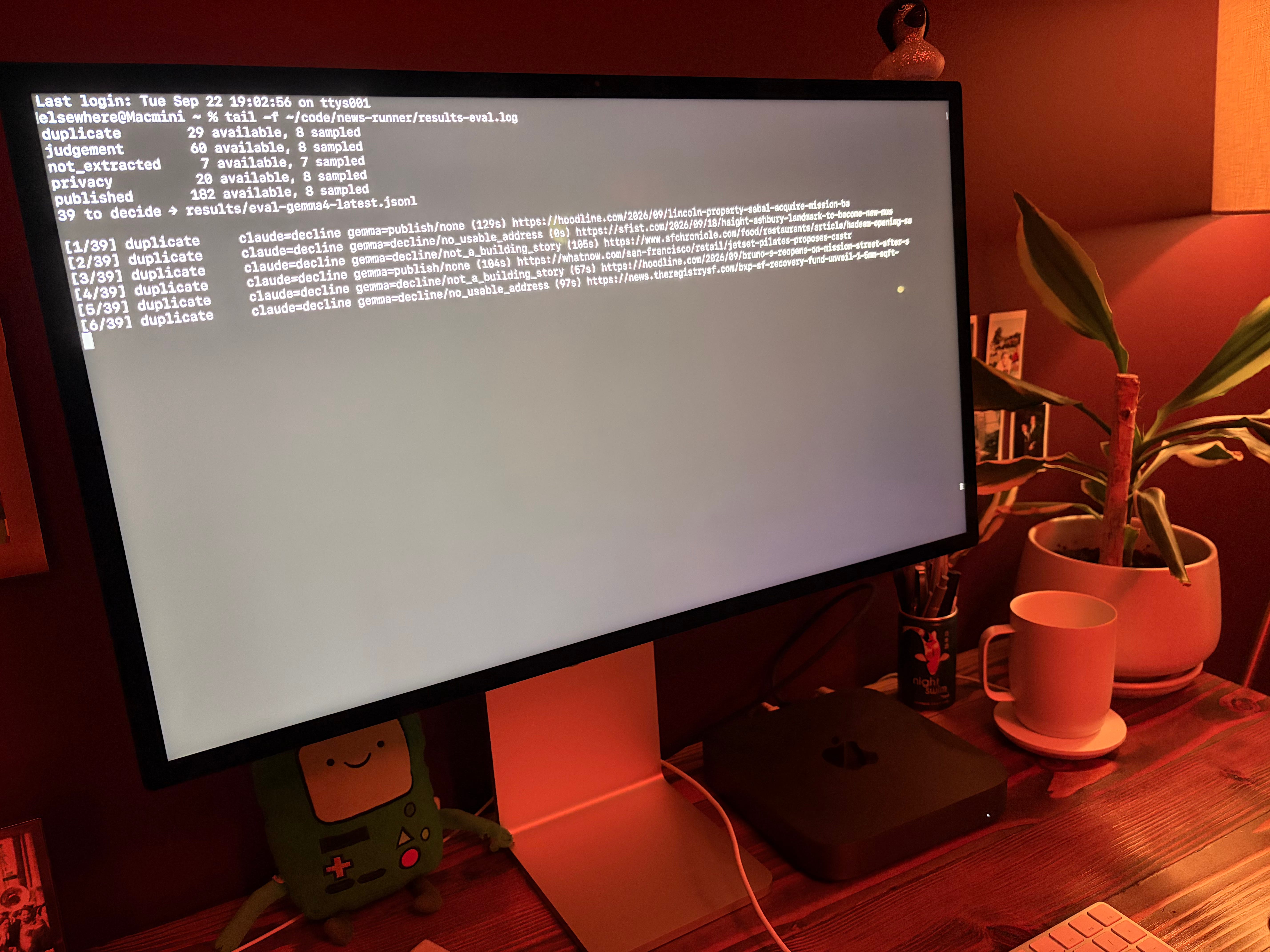
When it came to actual work, results were disappointing. I was hoping it could vet news articles to find stories that were interesting and about places, which is a task that costs me about $7 daily if I run it on the Claude API. I had Claude work with Gemma to fine-tune the prompt, but eventually Claude gave up, telling me Gemma wasn’t up for the task. Its results were too far off to be useful.
Finally, after much testing and disappointing results, I landed on some tasks that Gemma could handle. It’s currently going through every building permit in San Francisco and categorizing the “material” (interesting) ones, and categorizing them. This will help trim the timelines for buildings to omit boring and routine permits, and only show the ones that are actually interesting history of the building. This is perfect for Gemma, because each permit is approximately one sentence. It’s making thousands of tiny, inconsequential decisions.
While the initial run takes the better part of a week, the ongoing weekly run is expected to take only half an hour. That affords room to add on other tasks, like converting permit jargon into legible prose, and growing a dictionary of abbreviations to automatically replace.
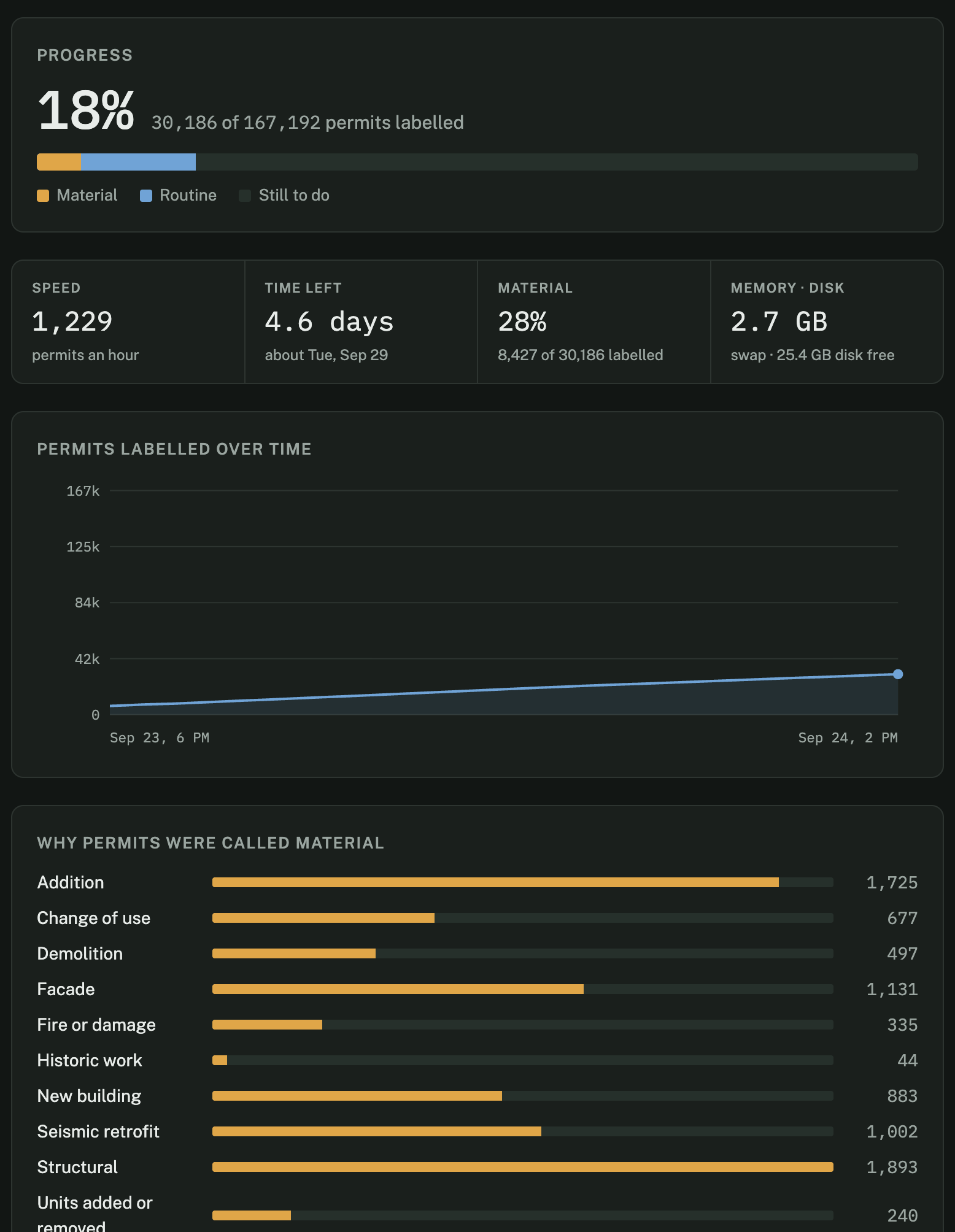
Vetting permits isn’t terribly exciting. I’d like to give Gemma and the Mac Mini some more impactful work to do. But without purchasing more RAM and GPU, it seems like I’ll be stuck relying on data centers for the time being. Perhaps the open models will get more efficient over time, and maybe I’ll get my hands on more powerful hardware.
Stir Fry Sauce
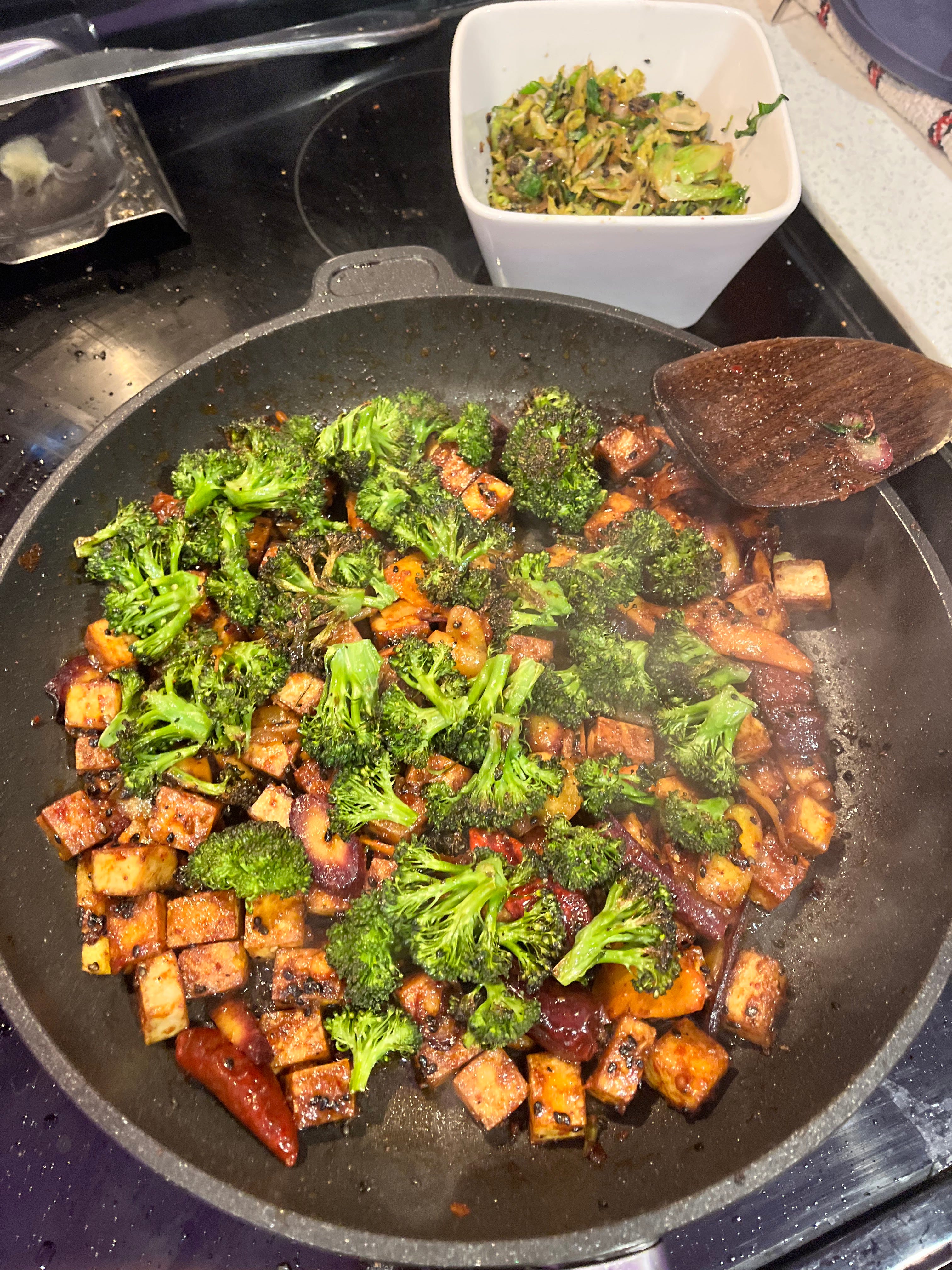
This soy sauce concoction is another staple in our fridge, alongside red lentils. All the ingredients can be tossed into a mason jar—or better yet, a mostly empty peanut butter jar. Inspired by The Korean Vegan, I’ve made some modifications (notably, peanut butter).
First, I pour in a full cup of tamari, which is just gluten free soy sauce. A key ingredient for flavor is a couple tablespoons of gochugaru flakes, the Korean pepper best known for its role in gochujang. Then I dice green onions, a shallot, and garlic. Next I measure out two tablespoons of maple syrup, and a tablespoon each of mirin and rice vinegar. Mirin contains alcohol that evaporates when cooked, helping the sauce stick to the stir fry ingredients. Finally, a bit of black pepper and turmeric. And my big alteration: a quarter cup of peanut butter. As with the red lentils, I’m not aiming for authenticity here. Just a delicious weeknight meal that both my husband and I get excited about.
The mason jar format makes it easy to shake this up real good, and re-shake it before use. The flavors marinate in the fridge until I’m ready to pour it over some tofu. I generally roast the broccoli separately and stir it in after turning off the stove, to avoid the broccoli sweating water.
The Month Ahead
We’ve got tickets to see Mon Rovia and Iron & Wine at The Castro, and Sawyer Hill at The Independent. And there’s already a handful of Halloween parties on the calendar.
Great post! And thanks for turning me onto In the Works! Really cool videos, like I was actually there!